The monsters we don’t see: finding totoro in the shadow of illness
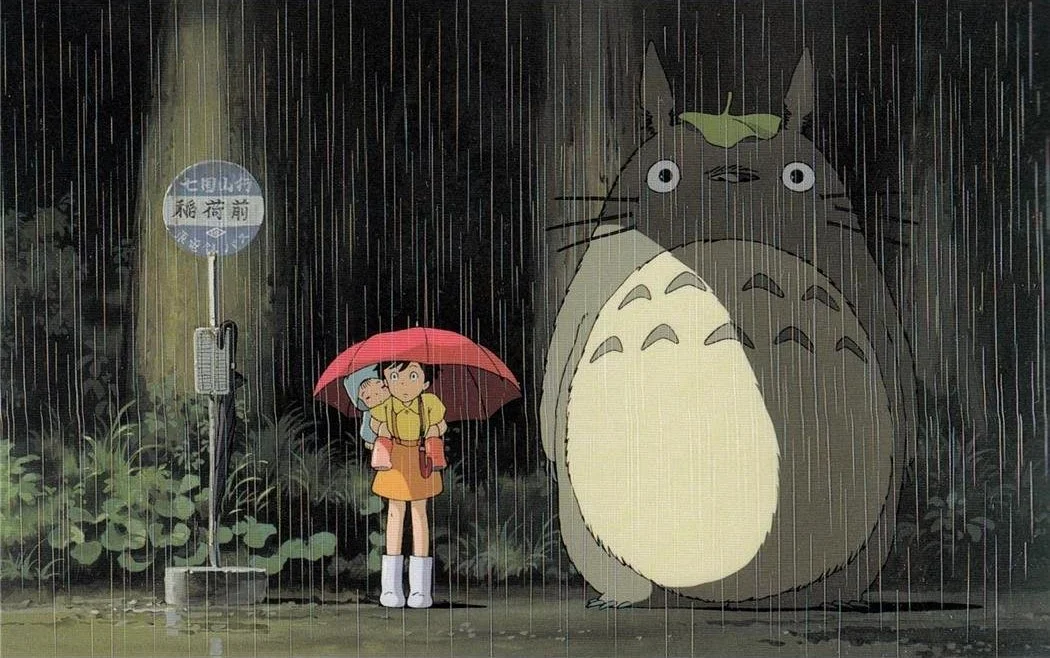
Beneath the surface of everyday life, another kind of silence can take hold when illness enters a home. It is not the silence of emptiness, but something heavier: the quiet accumulation of things that cannot be said, the atmosphere of a hospital room somehow carried back through the front door and absorbed into the ordinary rhythms of family life. Everything continues, and yet nothing feels quite the same.
There is a particular strangeness to being young in the presence of something you cannot change. The world continues to ask you to grow, to learn, to make plans, to inhabit the ordinary, while somewhere beneath it all another reality has taken shape. Time becomes divided between what is happening and what must still be lived as though it were not.
Perhaps this is one of the particular lonelinesses of being young: to understand enough to feel the weight of what is happening, but not enough to know where to put it. Fear exists without language. Waiting becomes its own kind of existence. You learn to read what is absent as carefully as what is spoken — the pauses in a conversation, the expressions on adult faces, the sudden quiet in a room.
It was a landscape I had known myself, long before I had the language to recognise it.
Years later, I would find an unexpected reflection of it in a place I could never have anticipated: Studio Ghibli’s My Neighbour Totoro.
For those who have lived in the shadow of a hospital room, there is something deeper beneath the celebrated magic and whimsical charm of this film. At its heart, My Neighbour Totoro understands something rarely captured in stories about being young: what it means to live with fear before you have the words for it. The long, suspended waiting. The dread that arrives in the quiet moments. The instinctive knowledge that someone you love may be slipping beyond your reach, and the helplessness of being too young to alter the course of what is happening.
You begin to live in the shadows. You become attentive to the silences around you, to the expressions on adult faces, to what is said and what is left unsaid. You understand without ever being told. And somewhere along the way, your own fear can become another thing you learn to carry quietly, because there is no other way to live alongside it.
This is one of the quiet truths that Totoro embodies: a strange, gentle companionship that belongs to a world where fear is not the only presence.
When the world around us becomes difficult to inhabit, we can retreat, even briefly, into a reality that sustains us. The inner world remains. Imagination makes room for something beyond what is immediately in front of us, a place where we are not defined entirely by what we are afraid of losing.
Perhaps this is what I recognised in the film years later. Not an answer to what happened, and not a story that made grief easier to understand, but a recognition of a landscape I had once inhabited without having the language to describe it: the strange coexistence of the ordinary and the unbearable, of fear and wonder, of knowing that something terrible may happen and still being capable of looking closely at the world.
Perhaps certain stories find us only when we are old enough to understand what we could not name when we first encountered them. We return to them as adults and discover that some part of us has been waiting there all along.
Writing this is my way of bridging personal pain with art. My mother is gone, and the devastation of pancreatic cancer reshaped the landscape of my life. But looking back through the lens of Miyazaki’s magical realism reminds me that even in our darkest and most helpless moments, the imaginative, loving and resilient parts of childhood can remain a sanctuary.
I do not think imagination can protect us from loss. Neither can ordinary life. They can only give us somewhere to stand while the world around us is changing.
Perhaps that is what I find in Totoro now. Not an escape from what happened, but a reminder that the frightening world is never the only world we inhabit.
We cannot always stop the rain from falling. But sometimes, if we look closely enough, we can find comfort in the shadows while we wait for the storm to pass.