Lou Andreas-Salomé: Freedom of existence
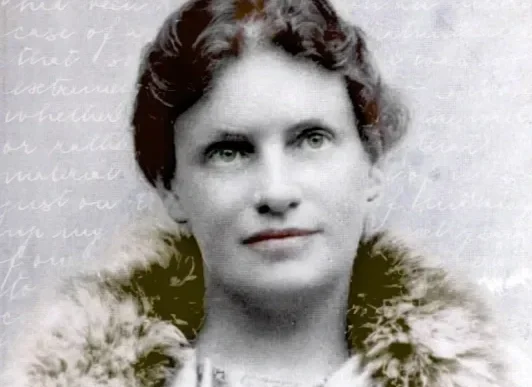
A woman who defied her time.
Lou Andreas-Salomé was one of the first women recognized as a major intellectual force of her time. She was rare, singular, rejecting the norms imposed on women, and embodied a freedom of thought that allowed her to engage on an equal footing with the great minds of her era.
Nietzsche, Freud, Rilke: these men encountered her, admired her, and she played a major role in their intellectual development.
But Lou Andreas-Salomé was neither a muse nor a mere relational figure: she was an independent thinker, profoundly modern in 19th-century Europe.
I felt compelled to write about this remarkable woman and highlight some of her important legacy.
Throughout history, too many women have been pushed aside, remembered not for their own thought, but as companions of men who supposedly enabled their social ascent.
For centuries, women were unjustly excluded from the intellectual arena, denied education, and considered naturally inferior to men. Aristotle, for example — one of the greatest thinkers of the 4th century BCE — claimed that women were “failed men,” inherently subordinate in rational order.
In a world and an academic tradition that left so little space for women, it is essential to remember that the philosophical legacy we inherit today was built almost entirely by men. Not because women did not think, but because countless brilliant female minds were forgotten, erased, or excluded from history. Hypatia of Alexandria, Hildegard of Bingen — to name a few, remind us of the many women marginalized in the dominant narrative. Only a handful of women, like Lou Andreas-Salomé, have survived in collective memory.
Why has Lou Andreas-Salomé’s memory persisted so vividly? It would be too simple, and frankly unfair, to reduce it to the intrigue stirred by her relationships with Nietzsche, Freud, or Rilke. Such an explanation is insufficient and raises a larger question: can a woman only be remembered through the men she knew?
Lou Andreas-Salomé deserves far more than this male-centered reduction. She truly thought and reflected on fundamental themes such as freedom, desire, life, religion, and morality. She was not only close to these thinkers: she inspired them, engaged in dialogue with them, and actively contributed to the development of some of their ideas, notably within Freud’s psychoanalysis.
She developed a singular reflection on freedom, which she conceived not as a transgression, but as an inner human necessity. She rejected institutional forms that confine — marriage, prescribed roles, moral dogmas — and defended an autonomy of mind and desire, an essential condition for any intellectual creation. For her, freedom was never abstract: it was lived in experience, in choice, in personal responsibility.
Desire, too, held a central place in her thinking. She saw it neither as a moral fault nor as a drive to suppress, but as a vital, creative force. Her reflections weave together body, psyche, and spirit in a singular way. This is why her dialogue with Freudian psychoanalysis is so rich: not in the mechanical application of concepts, but in a profound inquiry into the depths of inner life and what, in both men and women, longs to be expressed.
Freud’s psychoanalysis illuminates the unconscious currents of human life, but Lou Andreas-Salomé went further: she saw inner life not as conflict or tension alone, but as a space of creation, freedom, and personal experience. Her engagement with Freud does not make her a disciple; on the contrary, it shows how she enriched thought on desire and subjectivity, placing female reflection in a truly original perspective on interiority.
Lou Andreas-Salomé was not only a free woman, but a woman deeply faithful to life. Where others saw a trial or a struggle, she recognized a presence to be welcomed, a force one could trust. Life, for her, was neither to be dominated nor feared, but fully experienced, in its most intimate and demanding aspects. She regarded it as a silent friend, capable of transforming us and lifting us beyond ourselves. A woman who defied her time: a woman who loved life enough to make it a way of thought.
Are we ready to truly live, to let ourselves be carried through and transformed by life? Or will we remain on the surface, sheltered from what it demands, never daring to surrender to its full depth?