Hokusai at Palazzo Bonaparte: where beauty suspends time
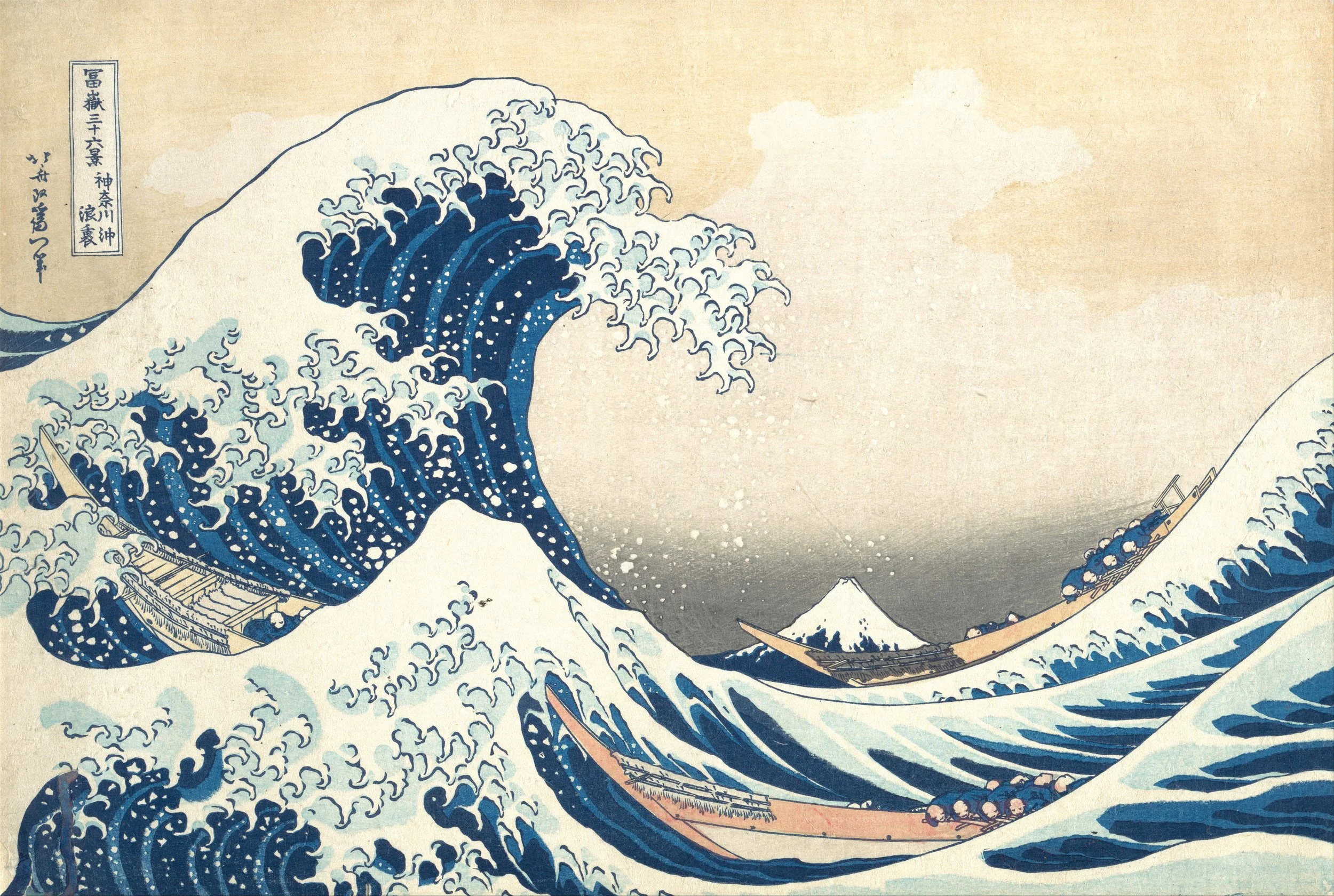
The colors and expression of this great artist, enhanced by the beauty of the Palazzo Bonaparte, left a deep impression on me. It is undoubtedly one of the most beautiful exhibitions I have ever had the chance to see.
From Mount Fuji to the black hair of Japanese women dressed in silk kimonos, as graceful as the peony petals he paints, Hokusai reveals both a prolific body of work and an exceptional level of quality. With more than two hundred works from the National Museum in Krakow, the exhibition captivated me. It unfolds through shifting rhythms — between landscapes and intimate scenes, between movement and stillness—blending immersive displays with original pieces.
The softness of the colors, the precision of the brushwork, the richness of the perspectives, and the intelligence of the compositions—all come together to amaze and inspire. I felt the seasons, nature, life in Japan—its people, its culture, its beauty, its imagination, even its demons. Everything was there.
At times, the beauty of what surrounded me overwhelmed me. It was not only the emotion of art or the exhibition itself, but pure beauty—the kind that touches the heart without needing words and suspends time.
And behind this beauty stood the artist himself, Katsushika Hokusai, in constant search. He is said to have changed his name dozens of times throughout his life, as if refusing to be fixed in place, constantly seeking to be reborn through his art.
This instability can be felt in his works: nothing is ever truly still. Waves seem ready to crash beyond the frame, gazes drift away, seasons flow into one another. Hokusai did not only paint what he saw, but what escapes—the movement, time, the fragile instant. It is said that at the end of his life, he claimed he had only begun to understand his art too late.
Perhaps this is what the exhibition reveals: not a finished body of work, but an unfinished quest—deeply human.
The Palazzo Bonaparte, together with its curatorial vision, so beautifully shaped this experience. It was not simply arranged—it was composed with great sensitivity, almost like a quiet dialogue between space, light, and artwork. Each room seemed to breathe in harmony with Hokusai’s world, allowing the works to unfold gently, with grace and a deep respect for their emotional resonance.
The space became more than a setting; it became a living presence, amplifying the beauty and poetry of what was shown.
Leaving the Palazzo Bonaparte, I understood that Hokusai does not only show us Japan or its landscapes: he reminds us that beauty and movement exist everywhere, even in the simplest moments. A work—just like a life—is never truly finished, but always becoming.
This experience will continue to resonate within me: an art that awakens, inspires, and invites us to imagine, to dream, and to look at life with renewed wonder.